
Business Continuity and Resilience Planning

No company is truly immune from the impact caused by internal and external threats to its company operations and those of its supply chain. The effects of Covid-19 impacted upon all UK businesses and global markets, causing closures, business disruption and supply chain challenges. Although this is probably the most extreme example of disruption, businesses face other operational pressures which will test their ability to continue trading on a day-to-day basis.
Successful companies have effective and well-rehearsed Business Continuity Management arrangements in place to help them recover their business activities in the shortest possible time.
The most successful companies have gone one step further and enhanced these arrangements with a Business Resilience Strategy which protects its most critical business processes, even during a major disruption.
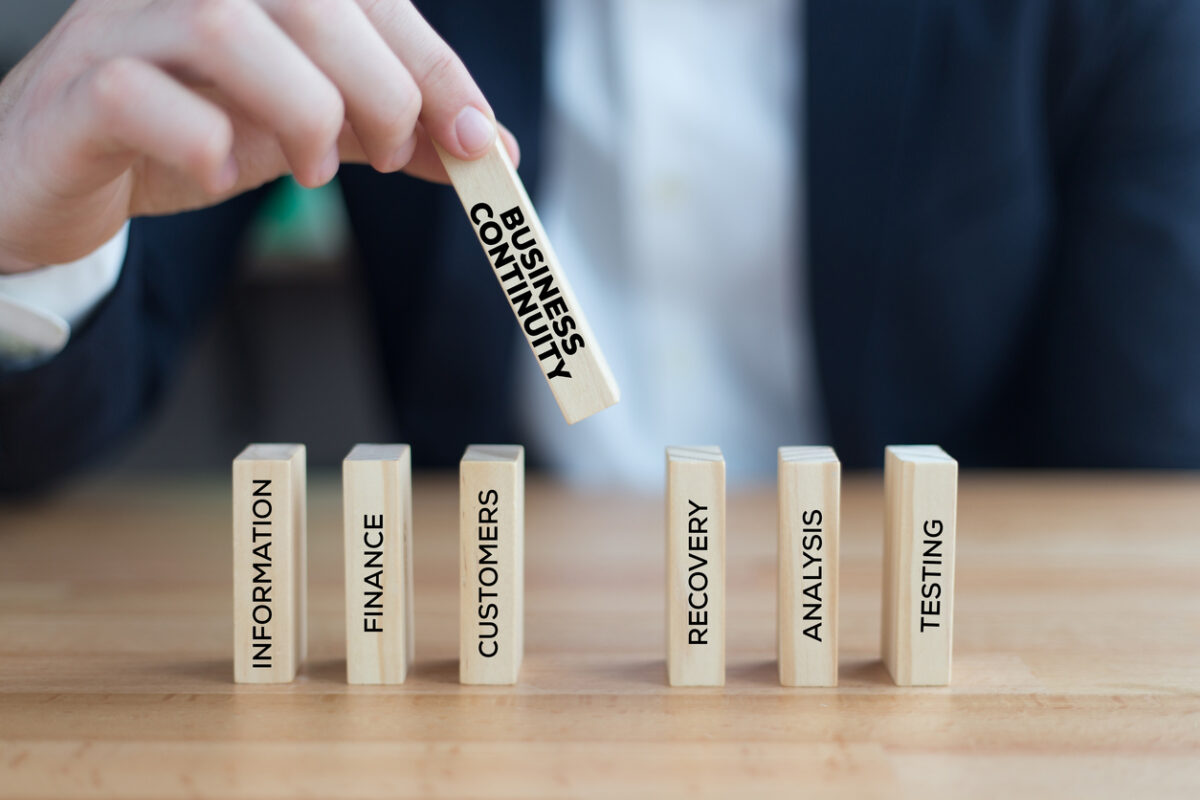
‘Business Resilience’ is the ability to rapidly adapt and respond to business disruptions, safeguard people and assets, while maintaining continuous business operations. It is based upon a company’s ability to reduce potential disruptions as well as respond to the event.
Ultra Services Group can help you at all levels; whether you need to establish a system, refresh an existing one or take the next step to Resilience.
An effective Business Continuity and Resilience Strategy is an investment into your company’s future, by effectively reducing the likelihood of failure, mitigating the impact on critical operations and finances, and boosting your company’s speed and strength of recovery following an incident.
- I’ve got an Emergency Recovery Plan, why do I need Business Continuity?
- I know my business, why do I need someone to tell me how to recover my business following a major emergency? Isn’t this just an unnecessary expense?
- I’ve got a Business Recovery System, why should I look at Resilience Planning?
- What is Business Resilience?
Business Continuity Management
- Review your business operations, identifying all interconnected work and supply streams.
- Assess the likelihood of significant threats and risks, both internally and externally to your business, occurring.
- Identify the impact of these risks on your business.
- Develop a strategy to deal with these risks by identifying what needs to be done, how, when, where and by whom.
- Develop your strategy into an effective and robust plan.
- Test your plan (desktop and practical exercises)
- Keep your plan updated whenever something changes.
- Work with you to develop a fully documented Business Continuity Management System.
- Assess the impacts of all foreseeable threats upon your business operations, especially critical activities.
- Review and update On-site Emergency Planning, assessing your Crisis Management capacity.
- Oversee and evaluate both Desktop and Scenario based exercises and rehearsals, to test company’s resilience.
- Assist in the development of an Implementation and Maintenance plan for the integration of the new Business & Resilience Strategy in line with your company’s strategic business goals.
Our Services




Customer Reviews
I was blown away by how efficient Ultra Services Group were from the very beginning. Recent changes in our sector left us feeling exposed to greater risk – but in reality, there were many other previously unconsidered aspects that left us open to serious incidents. I now feel that we are protected and have robust contingency plans in place should any unexpected adverse events occur – internally or externally
From the moment we spoke on the phone Ultra Services Group understood our business and spoke our language We deal with a very specific set of risks and due to the nature of our operations the utmost discretion was required Mike’s specialist knowledge was invaluable and we are now confident that we’re protected as much as possible from any potentially adverse events
Having witnessed the impact of unchecked risks and improper risk management with other companies I have worked with, I wanted to address this from the very beginning within our own organisation The process from start to finish was smooth and efficient and most importantly Mike and the team respected my time and only required my input when it was absolutely needed. We are now investing in training with Ultra Services Group to support our internal health and safety processes